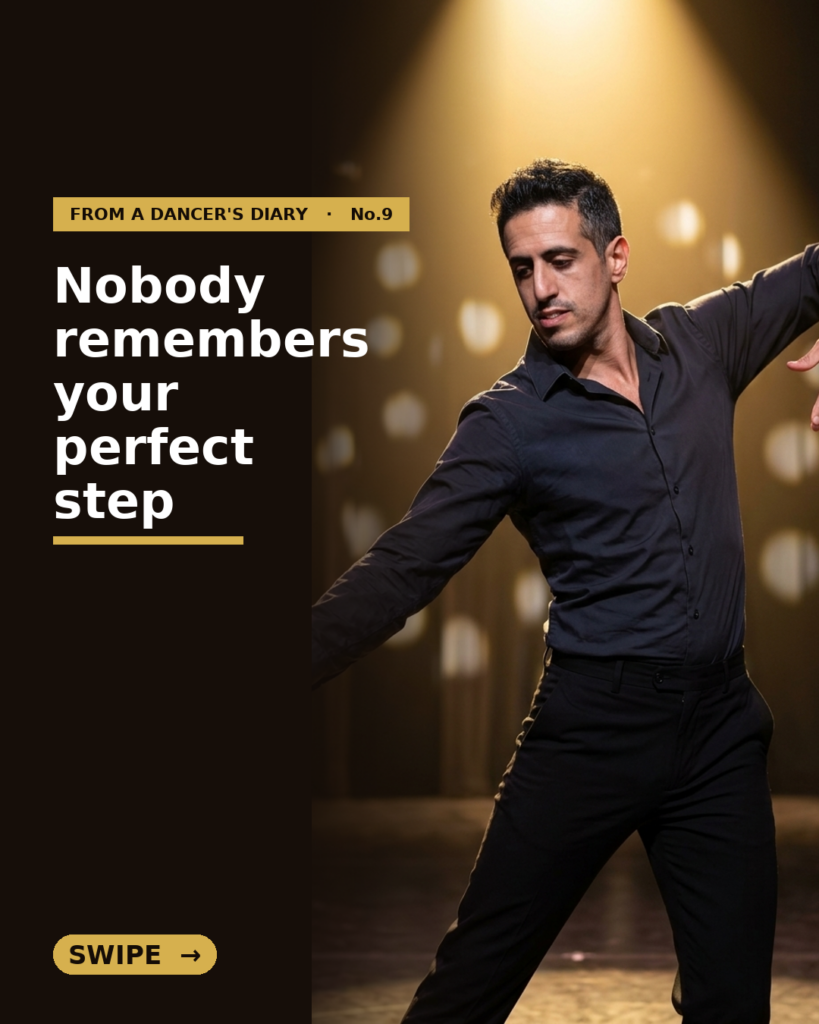
From a Dancer's Diary #1: Lead and Follow — The Art of Talking Without Words

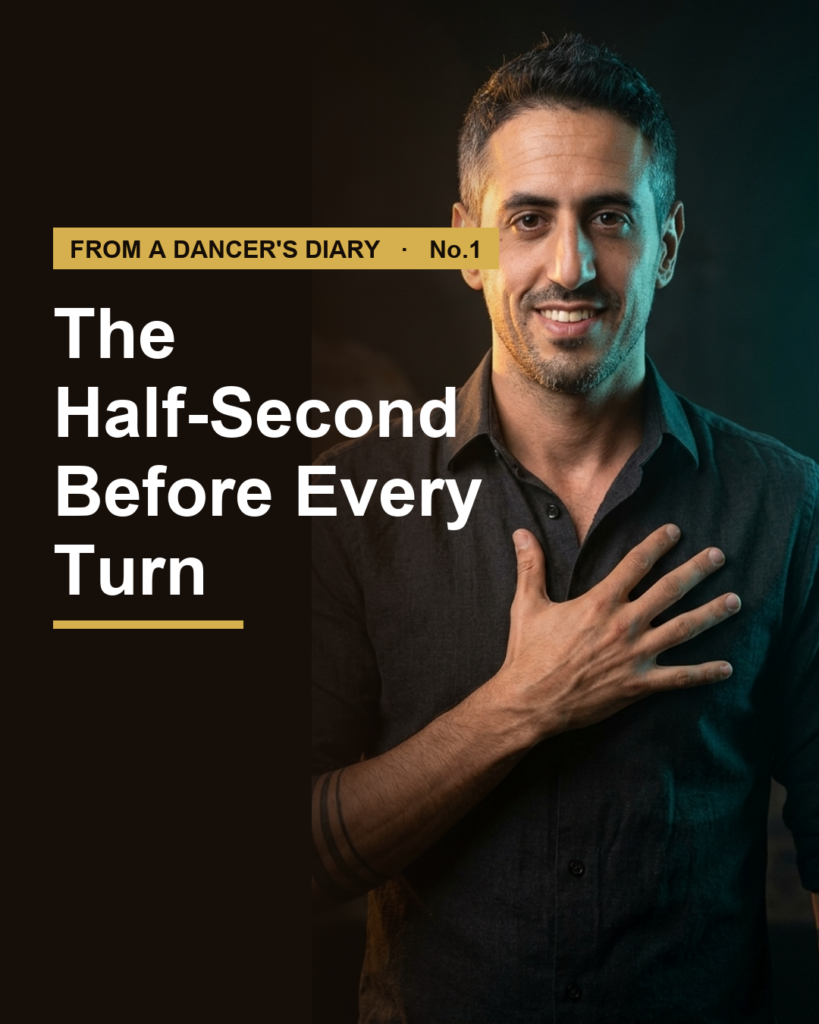
There's a moment, maybe half a second long, right before a turn. The follower doesn't know yet where she's going. The leader hasn't said a word. And yet, if the connection is right, her body already knows. That half-second is the whole art form, and I've spent twenty years chasing it — on stage, and in a very different room, staring at a screen during an incident at 2 a.m.
I remember a rehearsal in Jerusalem, back in my Academy days, where our teacher stopped the music mid-phrase and asked me: "Omri, what did you just tell her?" I hadn't spoken. I hadn't even thought I'd "said" anything. But my shoulder had dropped a fraction early, my frame had gone soft, and my partner had hesitated — because I'd sent a signal I didn't mean to send. That was the day I understood: on the dance floor, you are always talking. The only question is whether you're saying what you think you're saying.
The Grammar of Touch
Lead and follow is often misunderstood as one person "commanding" and the other "obeying." That's not it at all. It's closer to a conversation in a language made of pressure, timing, and weight. A good lead doesn't push — he proposes. A good follow doesn't wait passively — she listens with her whole body and responds with intention, sometimes even suggesting something back through a subtle delay or accent.
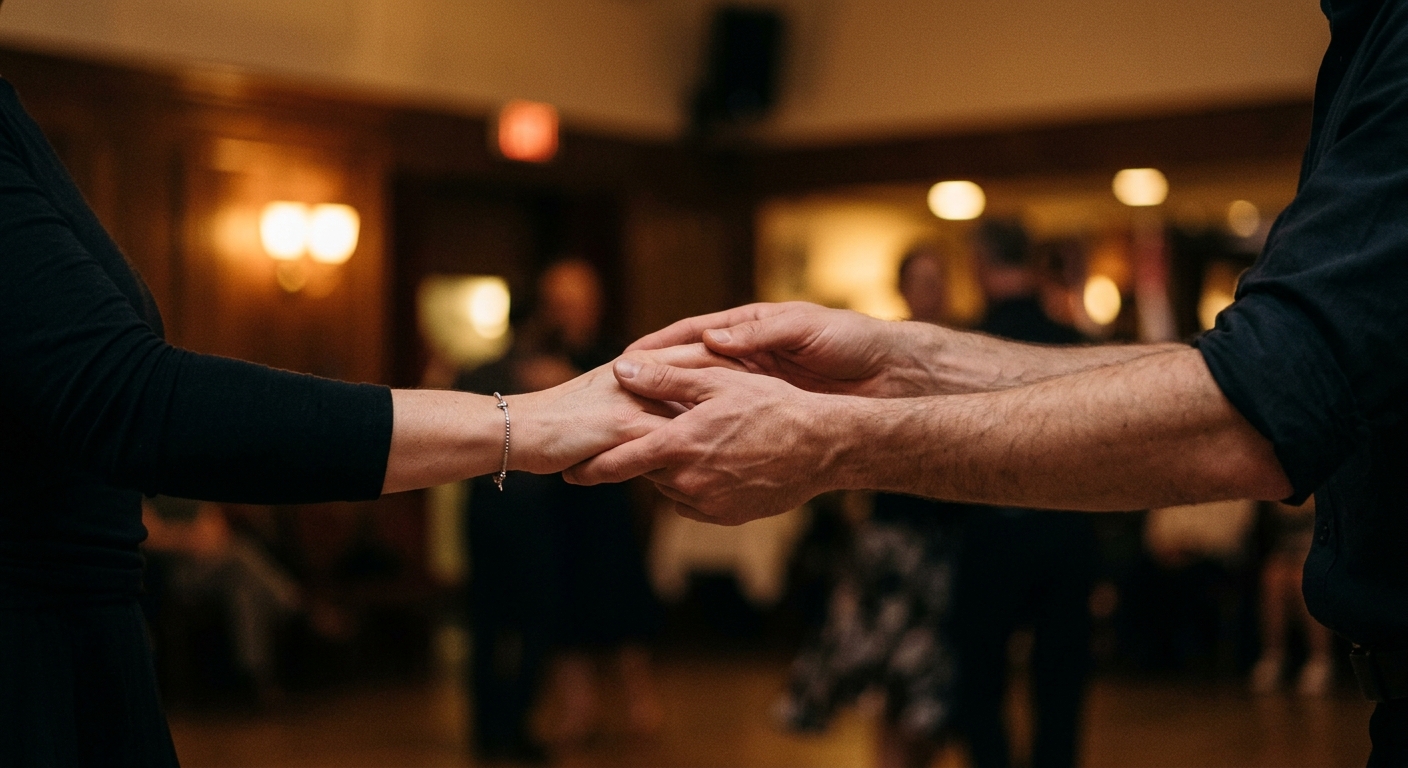
In bachata, the connection often lives in the chest and the hand. A firm frame with too much tension feels like shouting; a frame with no tension at all feels like silence — the follower has nothing to hear. The sweet spot, what we call "active connection," is like a good handshake: present, honest, adjustable in real time. I've taught this exact idea in over 300 beginner classes at Cyber Dance in Rosh Pina, and it's always the same revelation on people's faces: communication isn't about volume. It's about clarity.
Falling, and the Recovery That Follows
Here's something nobody tells beginners: even professional couples miss connections constantly. I've competed and performed as "Julia y Omri Bachata" in front of hundreds of people, and I promise you, somewhere in that routine, a lead was half a beat late or a turn spun one extra rotation. What separates a good couple from a great one isn't the absence of mistakes — it's the recovery. A great follower can absorb an unclear lead and still land on her feet, gracefully, as if it were choreographed. A great leader, feeling a follower drift off-axis, adjusts his frame instantly to catch her, invisibly, before the audience ever notices.
That skill — recovering under pressure without breaking the illusion of control — is exactly what I look for in a SOC analyst during a live incident. I've sat in rooms where a breach unfolds in real time and the runbook doesn't quite match reality. The team that panics announces it to everyone. The team that's trained well makes the correction quietly, keeps the "music" playing, and the business barely feels the stumble. In both worlds, the skill isn't perfection. It's composure married to adaptability.
The Follower Is Not Passive
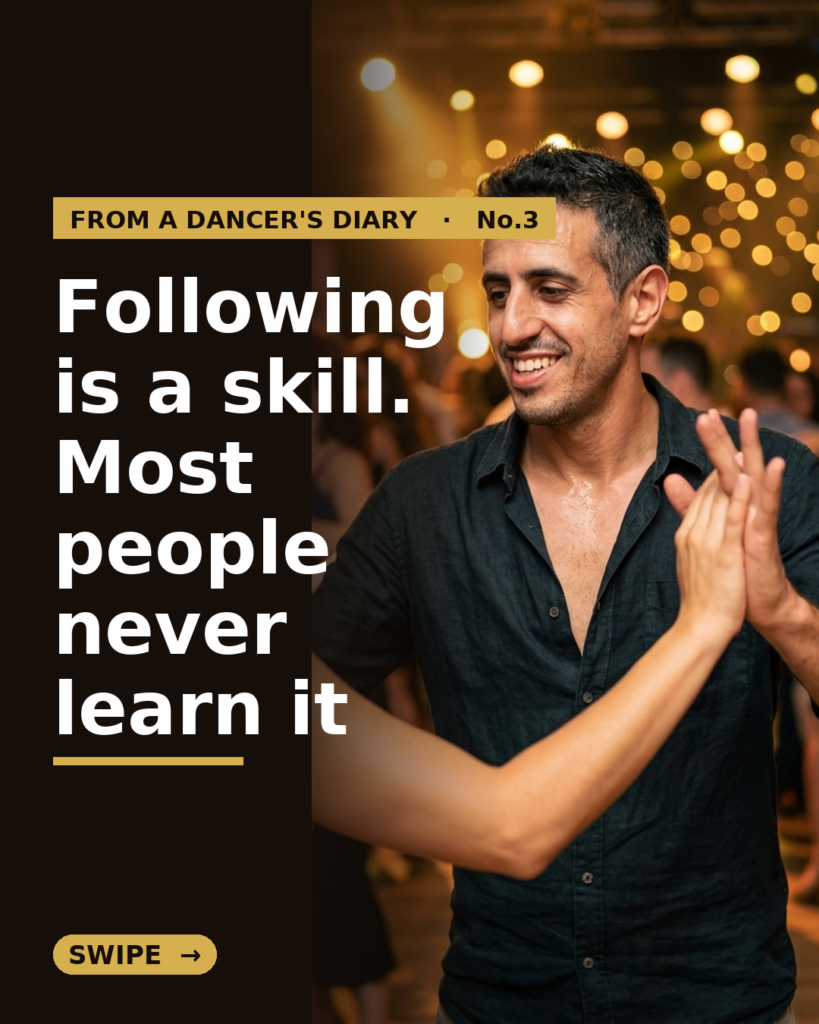
One of the biggest myths I try to break in my classes is that following is the "easier" role. It isn't. A follower processes an enormous amount of information in fractions of a second — the direction of a shoulder, the tension in two fingers, the timing of a step against the music — and she has to trust that information enough to commit her full body weight to it, often blind, often mid-spin. That is not passivity. That's high-bandwidth listening under uncertainty, which is a skill I'd happily hire for in any SOC or risk team.
In my cybersecurity work, whether running tabletop exercises for banks or teaching the CAIO course, I talk a lot about "reading the room" — the CFO's body language in a board meeting, the tension in a CISO's voice when reporting a near-miss. Dancing trained that muscle in me long before boardrooms did. You learn to read intent before words arrive, and often, words never arrive at all — the whole exchange happens in posture, pace, and pressure.
When the Music Changes Mid-Song
Salsa and bachata DJs love to throw a curveball: a tempo shift, a break, a sudden switch from romantic bachata to something more aggressive and syncopated. Good leaders anticipate it a half-phrase early and adjust their proposals; good followers stay elastic enough to shift with them without losing the thread. I've seen entire couples freeze on the floor when the music surprised them, standing there mid-step like a server that just received an unexpected input it wasn't built to handle.
That image stuck with me because it's precisely what happens during a live cyber incident when the attacker deviates from the expected playbook. The teams that "freeze" are the ones who only trained for the scripted scenario. The teams that keep dancing are the ones who trained the underlying skill — reading signals, adjusting weight, staying connected to the partner (or the system) in real time — rather than memorizing a fixed sequence of steps.

Three Things the Floor Taught Me About Silent Communication
- Clarity beats force. A clear, calm signal travels further than a strong, tense one — in a frame, in an email, in a crisis briefing.
- Recovery is the real skill. Nobody remembers the missed beat if you recover before anyone notices. Composure is a competitive advantage.
- Listening is active. Whether you're following a lead or reading a stakeholder, real listening means adjusting your own weight in response — not just standing there waiting for instructions.
- Train for the surprise, not just the routine. The music will change. So will the attack, the client, the deal. Build the muscle, not just the script.
Back to That Half-Second
I still think about that rehearsal in Jerusalem, my teacher's question hanging in the studio air: "What did you just tell her?" These days, I ask myself a version of that question in board meetings, in incident debriefs, in every room where something needs to be communicated without a single word actually being the thing that lands. The dance floor taught me that connection is a discipline you practice on purpose — and once you feel it, once, in that split second between the lead and the response, you start looking for it everywhere else in your life, too.
If you want to feel that half-second for yourself — whether you've never danced before or you're looking to sharpen a connection you already have — come find us at Cyber Dance in Rosh Pina. We teach Latin and bachata with real attention to lead and follow, not just steps. Message us on Instagram @cyber.dance.il, call +972-50-2020086, or reserve your spot for the next class here: https://edu.cyber-school.co.il/dance/.
Want to dance? Cyber Dance — a Latin dance school in Rosh Pina, Israel. Workshops & courses for every level · +972-50-2020086 · join here · IG @cyber.dance.il.