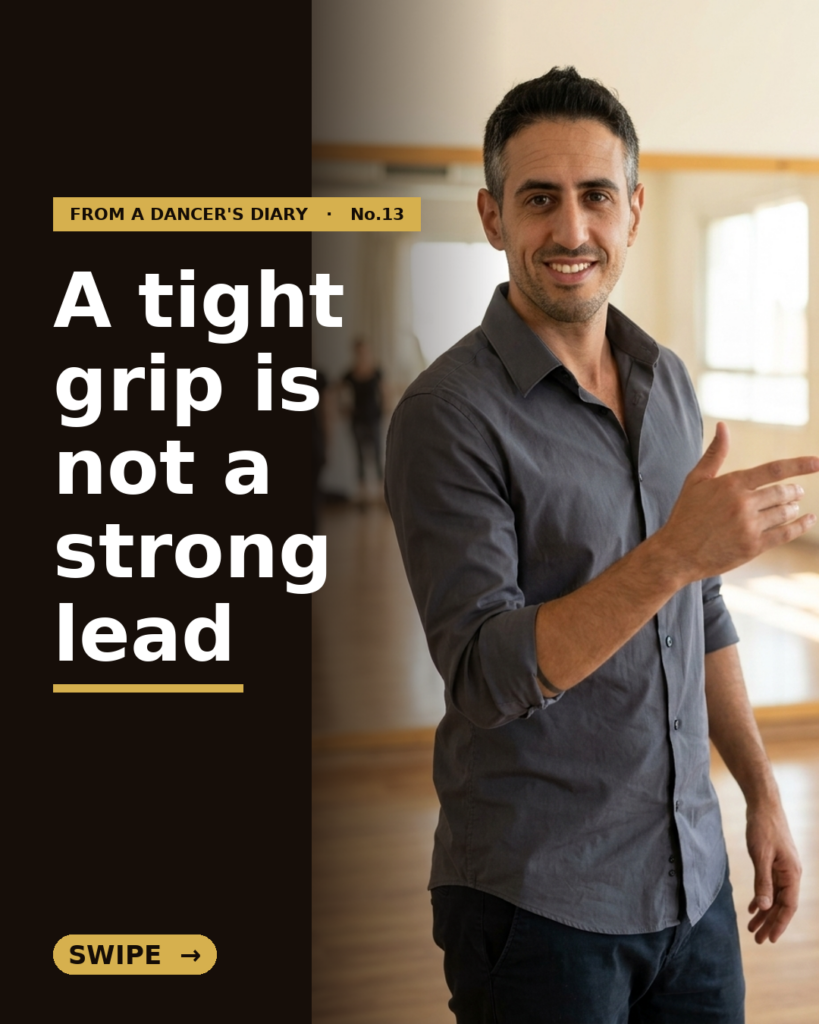
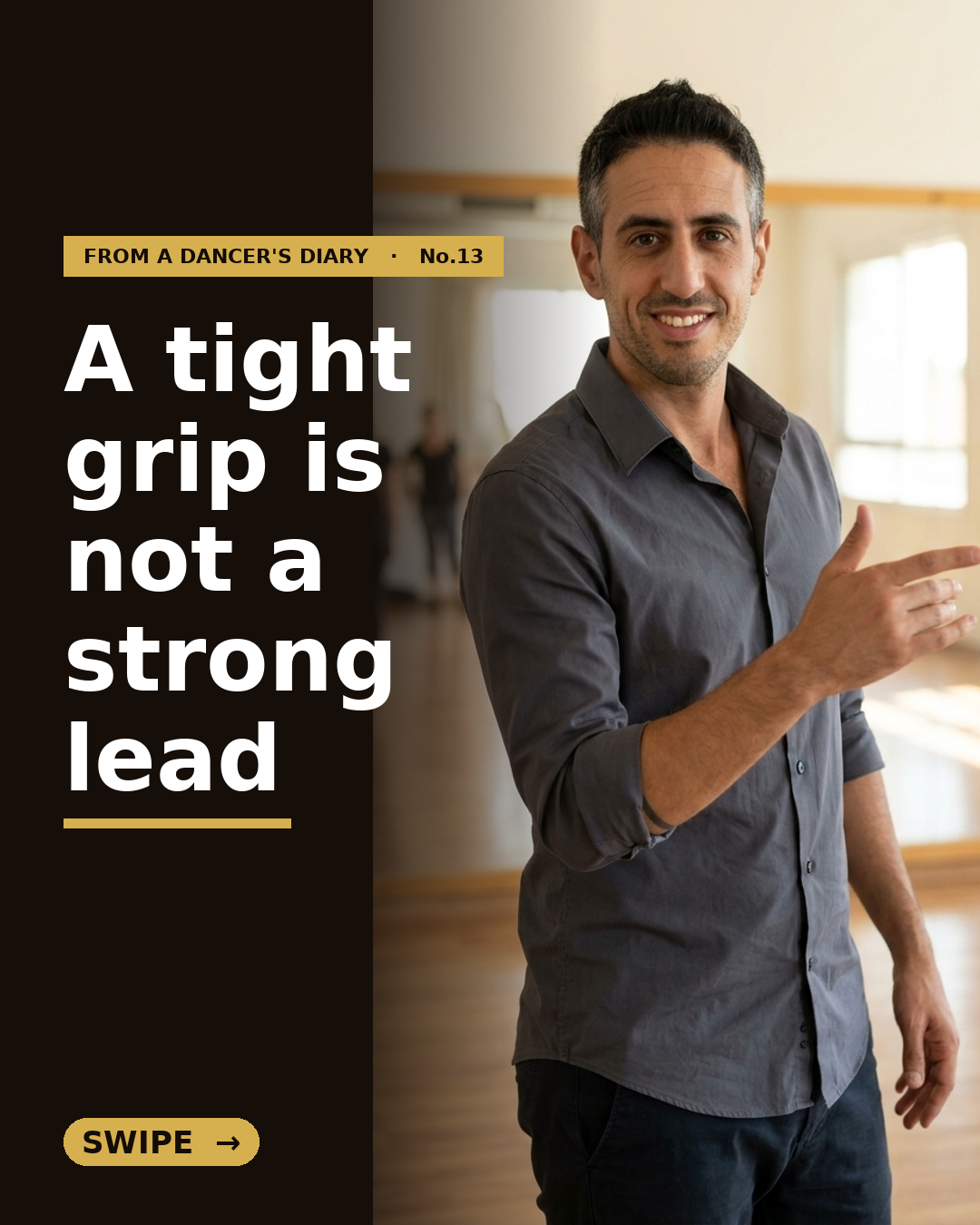
From a Dancer's Diary #13 — Holding the Frame: Leading by Creating Safety, Not Control

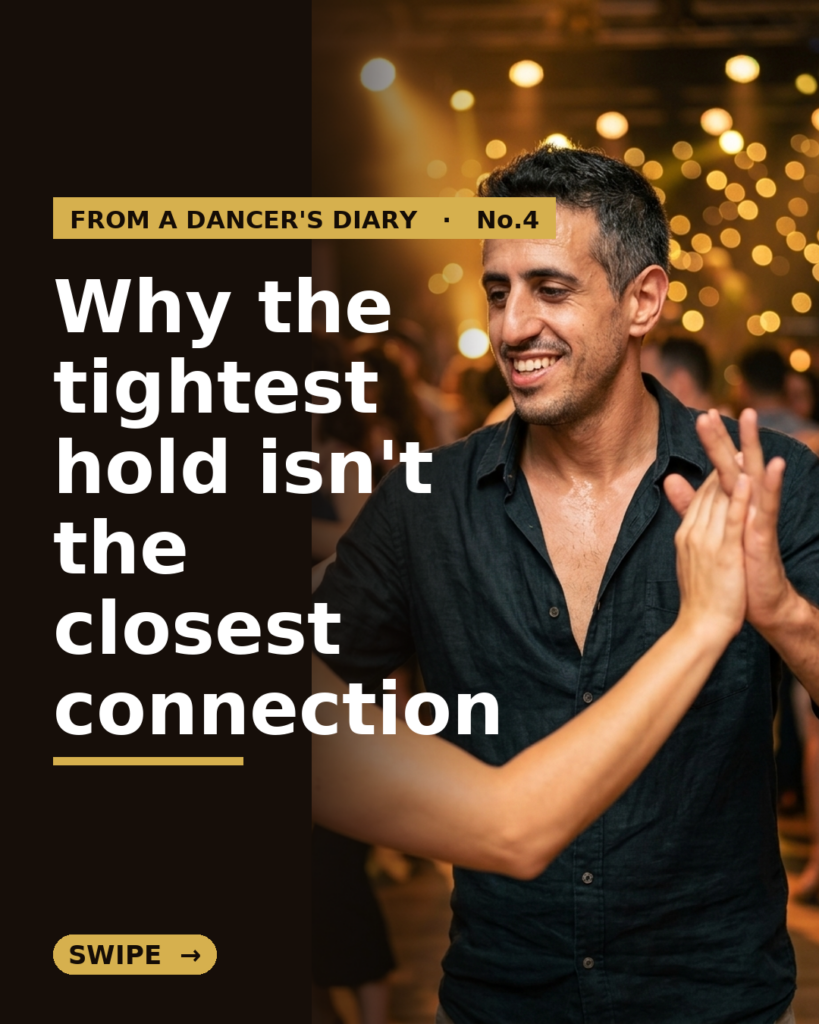
There's a moment in every beginners' class, usually around week three, when a new leader discovers his hands. Suddenly he realizes he can move another human being through space — and something in him tightens. He grips. He steers. He pushes his partner into the turn instead of inviting her into it. And she, feeling cornered, does the only sensible thing a body does when it's not safe: she resists.
I watched this exact scene unfold on a Tuesday evening in my studio in Rosh Pina. His name doesn't matter — I've seen this same well-meaning mistake from dozens of new leaders over the years. What matters is what happened next, and what it taught the whole room about leadership, long before anyone said the word "leadership" out loud.
The Grip That Isn't a Frame
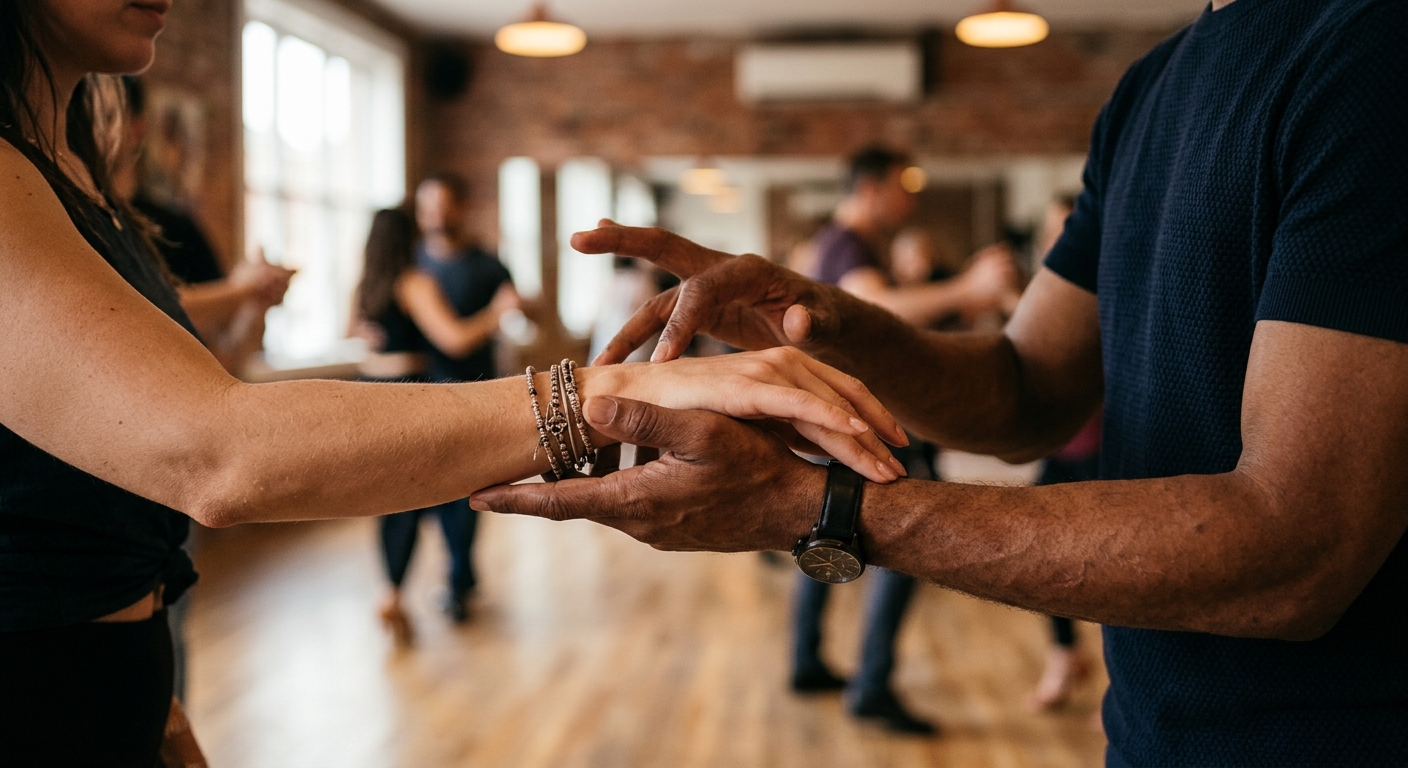
In partner dance we talk constantly about "frame" — the shape and tension you hold in your arms, shoulders and torso that lets your partner read your intention. A good frame is firm but never rigid. It's a wall she can lean into and trust completely, not a vice that traps her.
That evening, I stopped the music and asked him a simple question: "Is your hand telling her where to go, or are you dragging her there?" He didn't know the difference — most people don't, the first time they're given real influence over someone else's movement. So we slowed everything down. I had him soften his grip by maybe twenty percent and simply hold the space, without pushing. Within two tries, she turned on her own. Not because he forced her — because he finally gave her room to trust the frame and complete the motion herself.
That's the whole lesson, really. Control tries to make the outcome happen. Safety makes the outcome possible.
What a Frame Actually Does
A good frame does three things, and none of them involve force:
- It signals intention early. The follower feels where you're going a half-second before you get there, because your body committed to the direction first.
- It stays consistent under pressure. Even mid-turn, even off-balance, the frame doesn't collapse or overcorrect — it holds.
- It leaves room to respond. A frame that's too tight erases the follower's own musicality and judgment. The best leaders I've danced with give me just enough structure to feel safe, and just enough space to make the movement mine.
I remind my students constantly: leading in bachata is an invitation, not a command. The follower — and this is a skill in its own right, one I respect enormously — chooses to accept that invitation in real time, over and over, dozens of times a song. She can only make that choice freely if the frame feels safe enough to lean into.
From the Studio to the SOC
I've run enterprise risk assessments for banks handling incidents that could cost millions in a single weekend, and I've sat in boardrooms during live ransomware events where every executive in the room wanted answers immediately. The instinct in those rooms is identical to that beginner leader's tightened grip: control everything, demand constant updates, push the analysts to move faster.
It almost never works. I've seen incident response teams — sharp, capable people — freeze or fumble simple triage steps under a CISO who's micromanaging every command line. Not because they lack skill, but because the "frame" above them has gone rigid. There's no room to think, adjust, or use judgment; there's only pressure.
The engagements that go well — and I've led enough of them now, from CIPSEC-funded European projects to building a security function from scratch at Nation-E — share the same pattern as that Tuesday class. The leader sets a clear, calm structure: here's the escalation path, here's who owns what, here's when we regroup. Then he holds that frame steady, even as the situation shifts, and lets the team move inside it. The analysts don't need to be dragged through the incident. They need to trust that the frame won't collapse while they work.
Building It at Scale — UNO Festival
I learned this again, at a larger scale, building the UNO Festival — bringing together dancers from across northern Israel who'd never shared a floor before. Nearly three hundred people, dozens of instructors and volunteers, a packed weekend of classes and socials. I couldn't personally control every interaction on that dance floor, and I shouldn't have tried.
What I could do was hold the frame: clear structure for rotations, a culture of consent before every dance, instructors modeling respectful invitation rather than command. Once that frame was solid, something beautiful happened on its own — strangers from different studios, different towns, different dance backgrounds, trusted the space enough to actually connect. The festival wasn't a success because I controlled the outcome. It succeeded because people felt safe enough to show up fully.

Three Things Worth Carrying With You
- Commit to direction before you move. Whether it's a turn on the dance floor or a decision in a meeting, ambiguity is what forces people to resist you. Clarity, offered early, is what lets them follow.
- Soften your grip by twenty percent. Almost every leader — on the floor or in the boardroom — holds tighter than necessary. Test it. You'll often get a better result with less force.
- Structure enables freedom; it doesn't replace it. The best frame gives people just enough certainty to bring their own judgment into the moment, rather than waiting to be told everything.
- Steadiness under pressure is the whole job. A frame that panics or tightens the moment things go wrong was never really a frame — it was just control wearing a calmer name.
Back to That Tuesday
By the end of that class, the young leader who'd started the evening gripping his partner's hand like he was afraid she'd fly away was dancing with his hands almost open — present, connected, offering rather than forcing. She moved more freely than she had all night, because for the first time, she trusted the frame enough to fill it herself.
That's leadership, on any floor. Not the tightness of your grip — the steadiness of what you're willing to hold, so someone else feels safe enough to move.
If you'd like to feel the difference between control and a real frame — in your body, and maybe in how you lead — come find us at Cyber Dance in Rosh Pina. We run beginner courses and warm weekly socials for the whole northern community; details and sign-up at the link below, or reach out directly at +972-50-2020086 / @cyber.dance.il.
Want to dance? Cyber Dance — a Latin dance school in Rosh Pina, Israel. Workshops & courses for every level · +972-50-2020086 · join here · IG @cyber.dance.il.