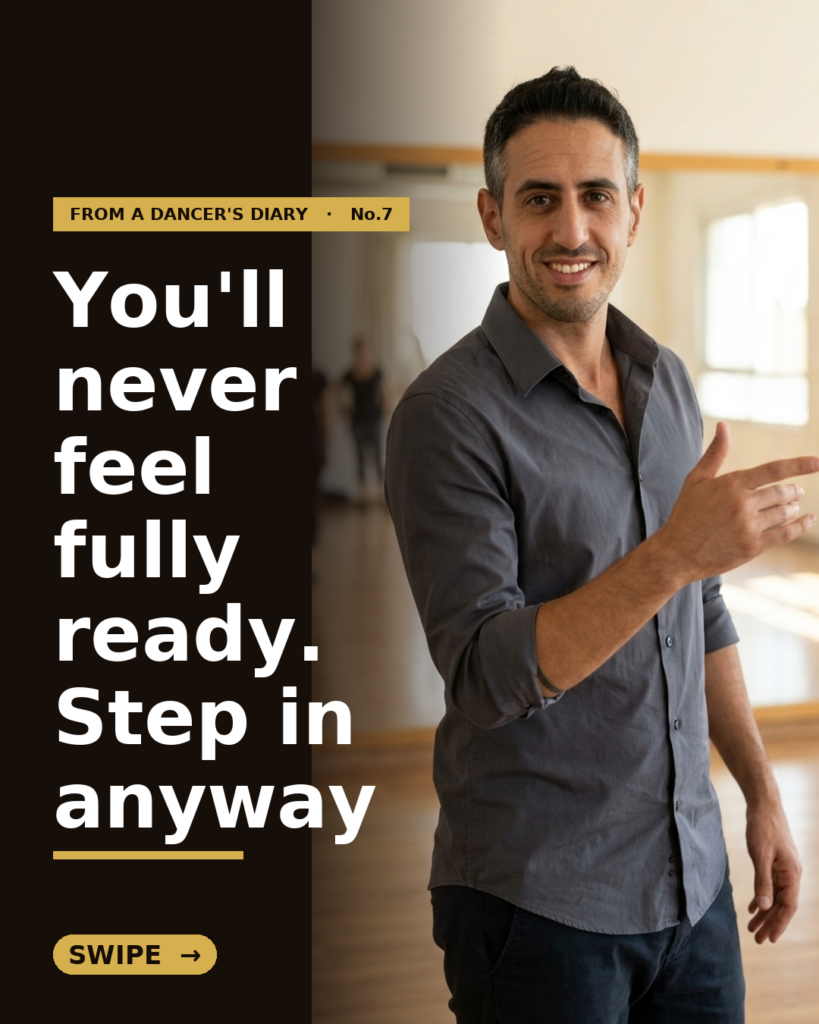
From a Dancer's Diary #10 — The First Basic Step: How a Dance, and Any Relationship, Actually Begins

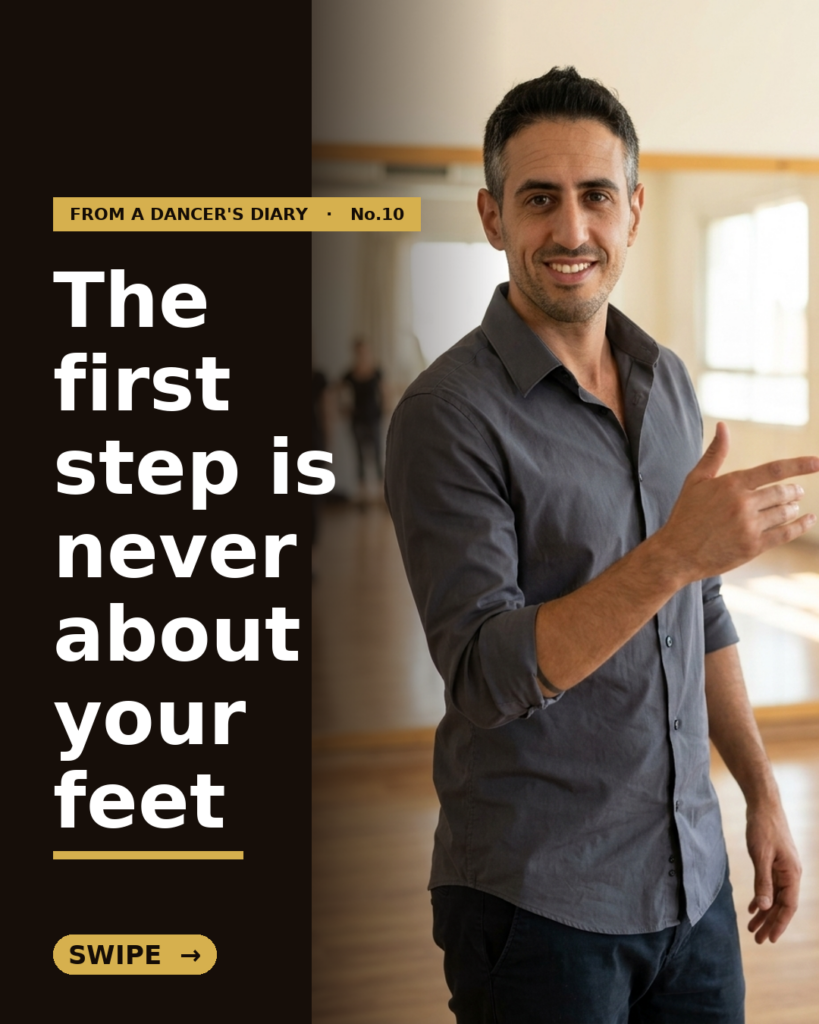
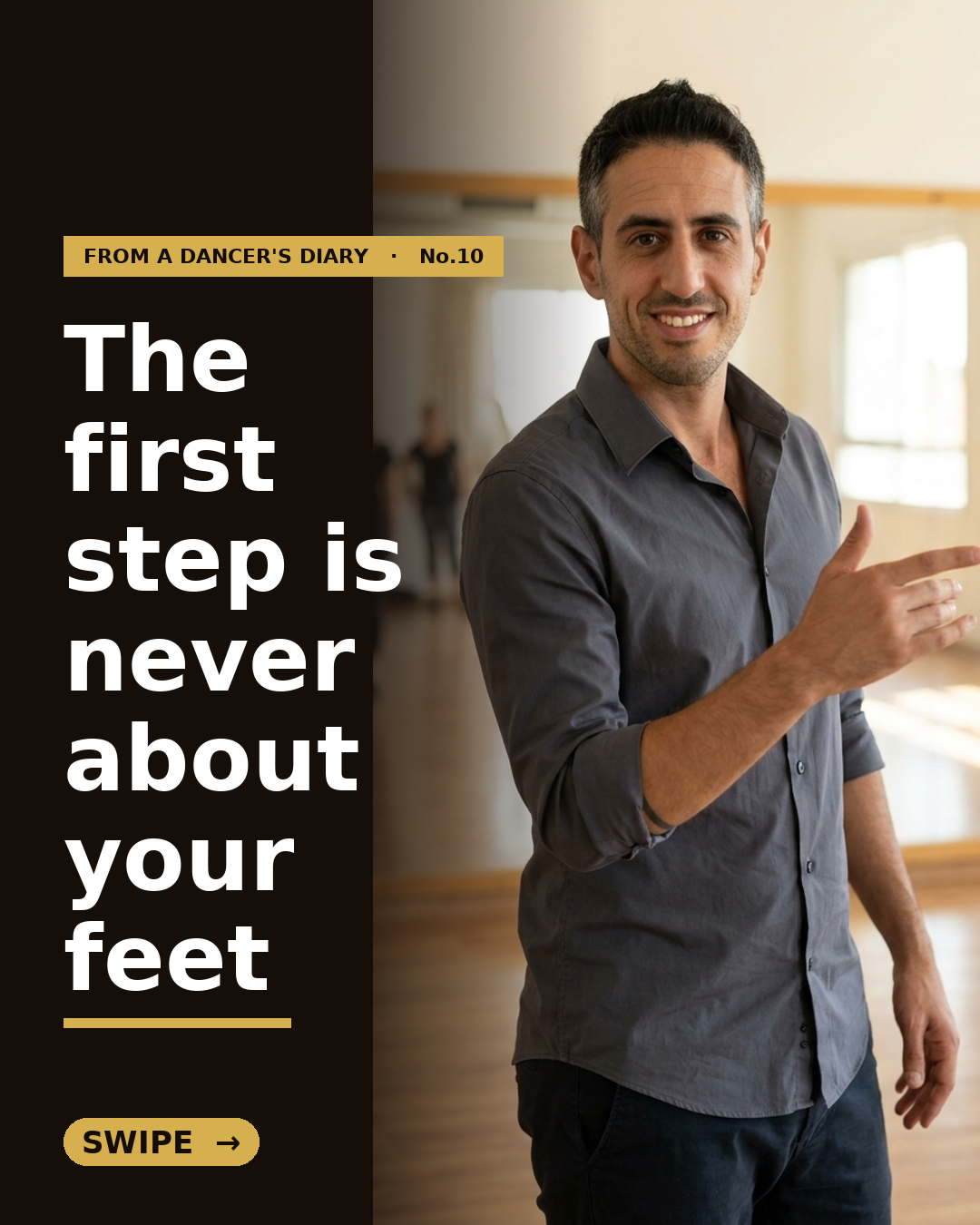
Her name was Noa, and she stood at the edge of the studio like she was deciding whether to jump into cold water. First class, first minute, first step. I watched her weight shift from foot to foot, arms crossed, eyes scanning the exits — not the physical ones, the emotional ones.
"I don't know how to start," she said. Not "I don't know the step." I don't know how to start.
I've heard that sentence hundreds of times in twelve years of teaching. And every time, I'm reminded that the first basic step in bachata — that simple side-to-side weight change — is never really about the feet.
The Step Nobody Tells You Is the Hard One
Bachata's basic step is deceptively small: four counts, a gentle hip movement, a shift of weight. On paper, a five-year-old could do it. And yet I've seen brilliant, accomplished adults — lawyers, engineers, one retired air force pilot — freeze completely in front of it.
Why? Because the step isn't the challenge. Beginning is the challenge. The moment before the first move is where all the fear lives: fear of looking foolish, fear of being seen, fear of not being "good enough" before you've even tried.
I tell every new group the same thing on night one: nobody in this room was born knowing this step. I certainly wasn't. I remember my own first partner class at the Jerusalem Academy, feeling like my feet belonged to someone else. The difference between the beginner and the professional isn't grace — it's mileage. Repetition. The willingness to be bad at something publicly, for a while, on the way to being good.
Relationships Start the Same Way
Think about the last time you started something that mattered — a new job, a friendship, a partnership, even a hard conversation with someone you love. The opening move is almost always small and almost always terrifying, out of proportion to its actual size.
A handshake. An email you rewrite six times. A "can we talk?" text. None of these are hard, mechanically. What's hard is the vulnerability of offering the first move and not knowing how it will be received.
In my cybersecurity work, I see this constantly. I've sat across from boards who needed to make a single, small decision — approve a modest budget line for a pilot Zero Trust rollout, or greenlight the first phase of an AI governance framework under the EU AI Act — and watched grown executives hesitate for months. Not because the step was complex. Because starting meant admitting they hadn't started yet.
What the First Step Actually Requires
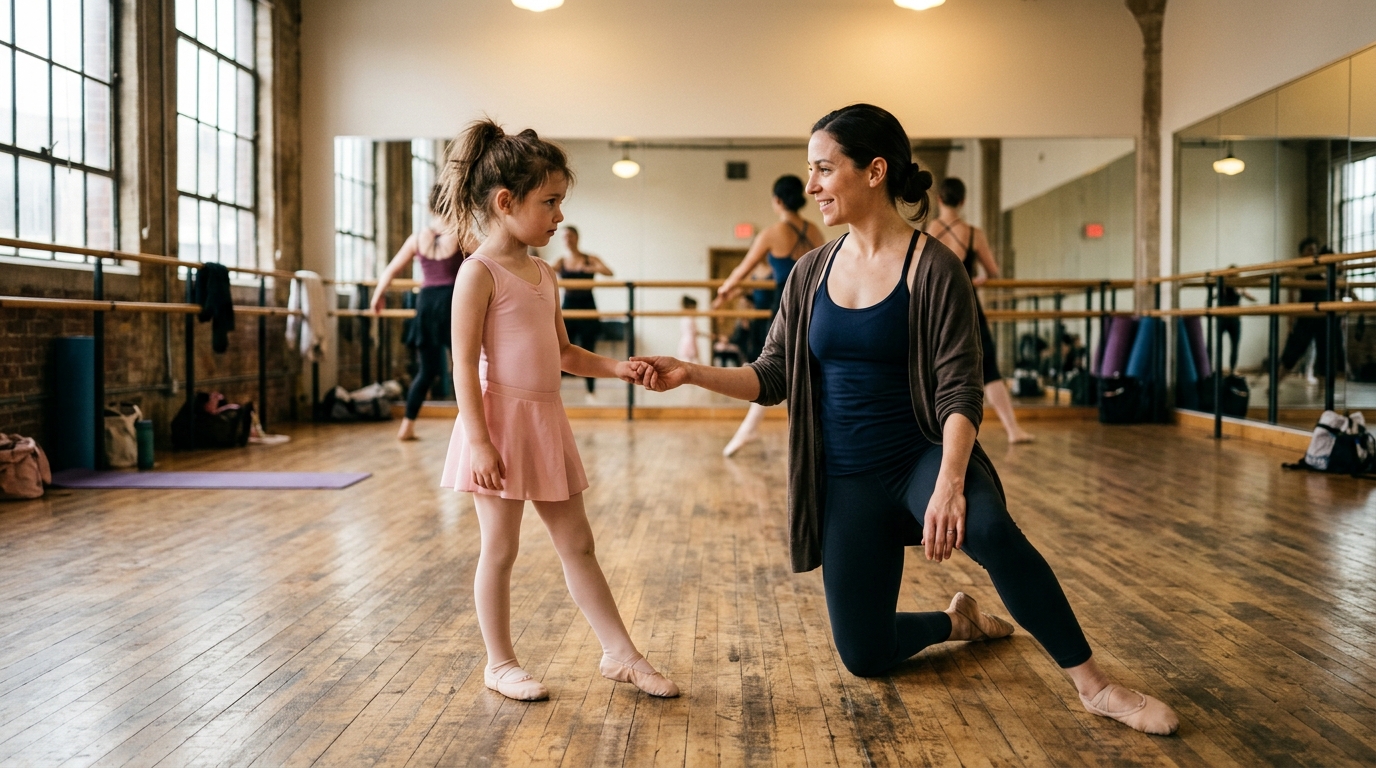
In eighteen years of teaching, both dance and cyber risk, I've noticed the first step always asks for three quiet things:
- Permission to be imperfect. Noa's first basic step was off-time, stiff, over-thought. It was also, undeniably, a step. The second one was better. The tenth one looked like dancing.
- A leader who invites rather than commands. In bachata, leading isn't pushing someone into motion — it's offering a clear, warm invitation the follower can trust enough to accept. The same is true leading a team through change: you don't drag people into a new security posture, you invite them, clearly enough that saying yes feels safe.
- Someone willing to go first. Every social dance floor in Rosh Pina has a moment before the music really gets going where everyone's standing at the edges. It only takes one couple stepping in for the floor to fill. Someone always has to be that couple.
The Physics of Beginning
Here's something I find almost mathematically beautiful: in bachata, the first step of the basic is a weight change, not a big movement. You're not traveling anywhere dramatic. You're simply shifting your center from one leg to the other — creating the small imbalance that makes the next step possible.

That's the real secret of beginnings, on any floor. You don't need momentum before you start. You only need to shift your weight slightly off the safety of standing still. Everything after that — the turn, the combination, the whole song — is built from that first, modest transfer of trust in yourself.
I've watched this exact dynamic in boardrooms: a CISO who can't get an entire three-year roadmap approved at once, but who gets a single pilot signed off — one control, one system, one small shift of institutional weight. That's the opening. Everything scales from there.
Three Takeaways From the Edge of the Floor
- Start smaller than you think you need to. The first step should feel almost too easy. If it feels huge, it's the wrong first step.
- Let the invitation be visible. Whether you're leading a dance or leading a change initiative, make the first move clear and low-risk enough that someone else can say yes without fear.
- Expect the first attempt to be clumsy — and let it be. Noa's first basic step was not beautiful. Her fortieth was. Nobody skips that arithmetic.
Back to Noa, Six Months Later
She's a regular at our weekly socials now. Last month, at UNO Festival, I watched her ask a stranger to dance — first time doing that, too, another small, terrifying, correct first step. She led with the same trembling hesitation I remembered from her very first class, and the stranger said yes, and they danced, imperfectly and joyfully, for one full song.
Every dance, every partnership, every meaningful thing I've built — from a security function at a startup with zero infrastructure to a festival that now fills a hall in the north of Israel — began with a step exactly that small, and exactly that uncertain.
If you're standing at the edge of your own floor right now, deciding whether to move — that hesitation is normal. It's not a sign you're not ready. It's the first count of the music, and the beat is already playing.
If you want to take that first step yourself, we'd love to have you at Cyber Dance in Rosh Pina — no partner or experience required, just the willingness to shift your weight. Reach us at +972-50-2020086, find us on Instagram @cyber.dance.il, or join a class directly at edu.cyber-school.co.il/dance/bachata.
Want to dance? Cyber Dance — a Latin dance school in Rosh Pina, Israel. Workshops & courses for every level · +972-50-2020086 · join here · IG @cyber.dance.il.