From a Dancer's Diary #14. The Courage to Be Led: Why Surrender Is a Strength, Not a Weakness

She stood in the middle of my studio, arms locked, spine rigid, eyes fixed on her own feet. "I just need to know what's coming," she said. "Then I can relax." I told her the truth: that's exactly backwards. The relaxing has to come first. The knowing never will.
The Woman Who Wouldn't Fall
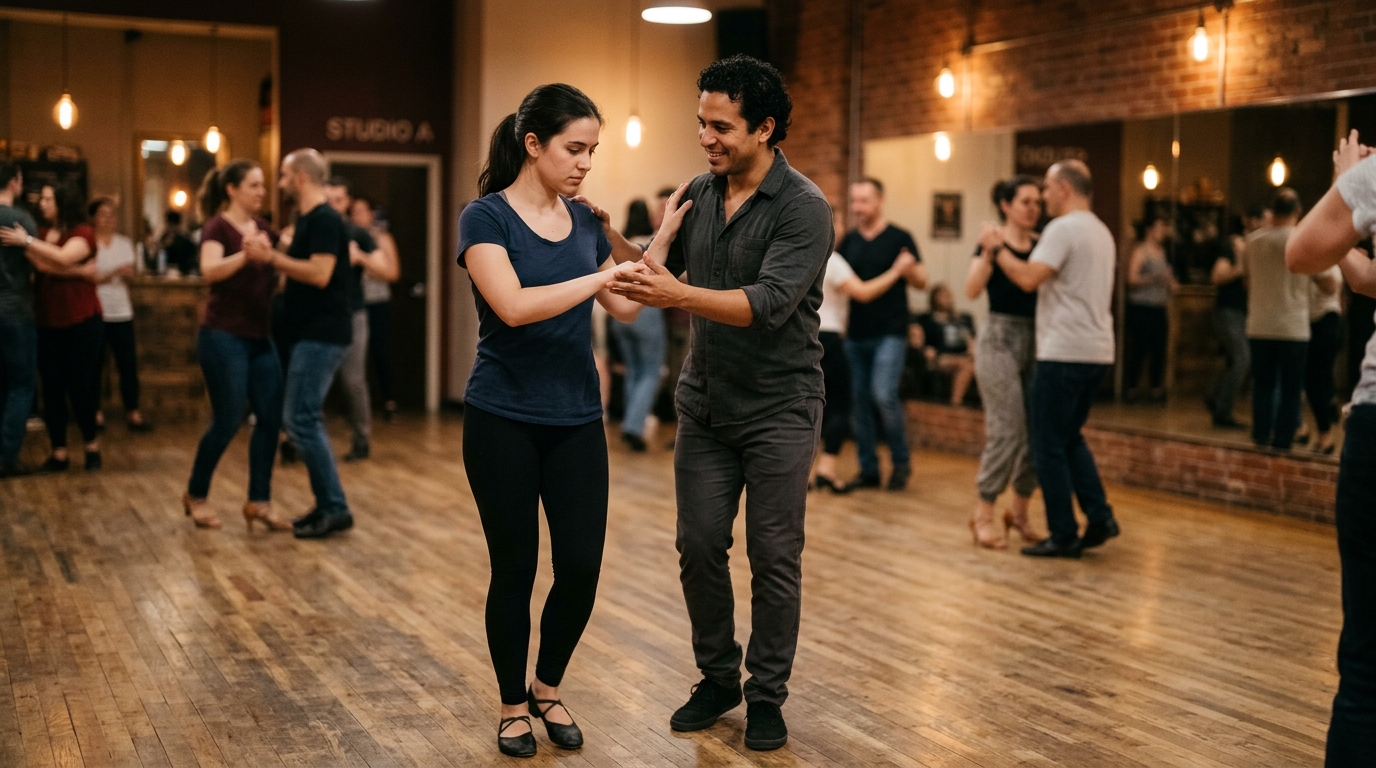
Her name doesn't matter. I've taught a hundred versions of her. Successful, sharp, used to running her own show. In her first weeks of bachata, she fought every lead. Not out of defiance, but out of fear: if she softened, she thought, she'd lose herself. She'd become a passenger with no say in where the car was going.
So she anticipated. She guessed the turn before it came and spun early. She braced her frame like a shield. And every single time, the dance broke. Not because she was wrong about the direction, often she guessed correctly, but because a lead only works through a body that is listening in real time, not one performing what it already decided.
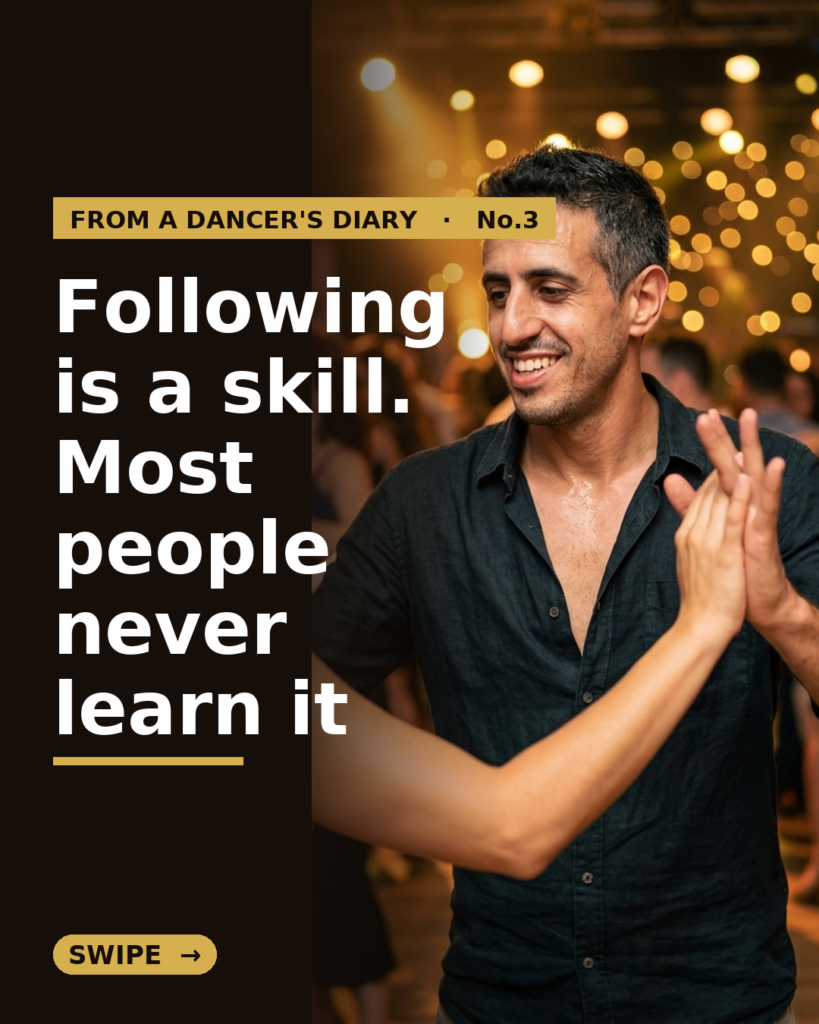
Why Following Is Not Passive
Here is what took me years on stage to understand, dancing alongside Julia in front of audiences from Israel to festivals abroad: following is not the absence of will. It is will, redirected. A skilled follower reads pressure through the frame in milliseconds, adjusts her weight, her core, her breath, and does it all while appearing effortless. That effort is real. It's just invisible.
Compare that to leading. A lead who commands rather than invites will get compliance, maybe, but never connection. I teach every beginner in my classes the same principle: a lead is an offer, not an order. And an offer can only be accepted by someone who has chosen, actively, to trust it. That choice, made fresh, every eight counts, is the actual courage in the room. Not the confidence of the one giving direction. The courage of the one receiving it.
The Boardroom Has the Same Trap
I've sat in enough executive rooms to recognize the identical posture. I've run risk assessments for banks where the most senior, most capable person in the room was also the most resistant to input, because listening felt like losing authority. I've seen CISOs so certain of their own read on a threat that they dismissed a junior analyst's flag, only to find out three weeks later the analyst was right.
In cybersecurity we build entire frameworks. Zero Trust chief among them, around a hard truth: nobody, no matter how senior, should be trusted by default. But there's a mirror truth we talk about far less: the discipline of trusting the right signal, from the right source, at the right moment, is itself a form of strength. A SOC analyst who overrides a well-tuned detection because their gut says otherwise isn't being decisive. They're doing what my student did with her early spins, guessing instead of listening.
Real command, on a dance floor or in an incident response room, is knowing when to hold the frame and when to let the information lead you.
What Changed for Her
It took about six weeks. Not a breakthrough class, just repetition, the same drill, over and over, where I'd lead a simple pause-and-redirect and ask her to do nothing except wait for the pressure to arrive before moving. No guessing allowed. The first few times she froze entirely, which was progress; freezing is honest, guessing is not.
Then one Tuesday at our weekly social, something shifted. I led a turn she didn't expect, into a moment of stillness she also didn't expect, and instead of anticipating an exit, she just. waited. Her body stayed soft. And when the next signal came, she moved with it instantly, cleanly, like the two of us were reading the same sentence at the same speed. She laughed out loud on the floor. "I didn't do anything," she said. "Exactly," I said. "That was the point."
Why This Matters Beyond the Studio
We live in a culture that rewards visible control. Speaking first, deciding fast, holding the pen. But some of the most important moments in a life, a relationship, or a career depend on the opposite skill, the ability to stay present, soft, and responsive while someone or something else takes the lead, whether that's a partner, a mentor, a piece of data, or simply an unexpected turn of circumstance you didn't plan for.
Surrender, done well, isn't collapse. It's a highly tuned form of attention. It's the analyst who lets the SIEM alert change their assumption. It's the executive who lets a junior voice reroute the strategy. It's the dancer who lets the lead's hand tell her something her eyes couldn't see coming.
Three Things I Ask Every Student to Practice
- Wait for the signal, don't perform the guess. Whether it's a dance lead or a piece of feedback at work, let the actual information arrive before you react to the one you imagined.
- Keep your frame soft, not absent. Trust isn't limpness. A good follower still has tone, still has presence, she's just not fighting the connection.
- Notice where you brace out of fear, not strategy. Ask honestly: am I holding on because it's right, or because letting go feels like losing myself?
Back to the Studio Floor
That same student now dances with a stillness that draws people to watch her, not because she's doing more, but because she's finally doing less, and doing it on purpose. Every time I watch her wait for a lead instead of racing to meet it, I think about how much strength that stillness actually took to build.
We'll keep building it together, students preparing for our instructor-training graduation event, dancers reviewing their own frame frame-by-frame on the Cyber Dance video-analysis app, and the whole community gathering each year at the UNO Festival we've built together in the north.
If you've never let yourself be led, really led. I'd love to have you on the floor. Cyber Dance runs weekly bachata classes and socials at the Rosh Pina community centre. Message us on Instagram @cyber.dance.il, call +972-50-2020086, or just save yourself a spot here: https://morning-sale.page/bachata. Come find out what your own stillness can do.
Want to dance? Cyber Dance, a Latin dance school in Rosh Pina, Israel. Workshops & courses for every level · +972-50-2020086 · join here · IG @cyber.dance.il.