From a Dancer's Diary #11 — Dancing the Pauses: The Power of the Space Between the Notes

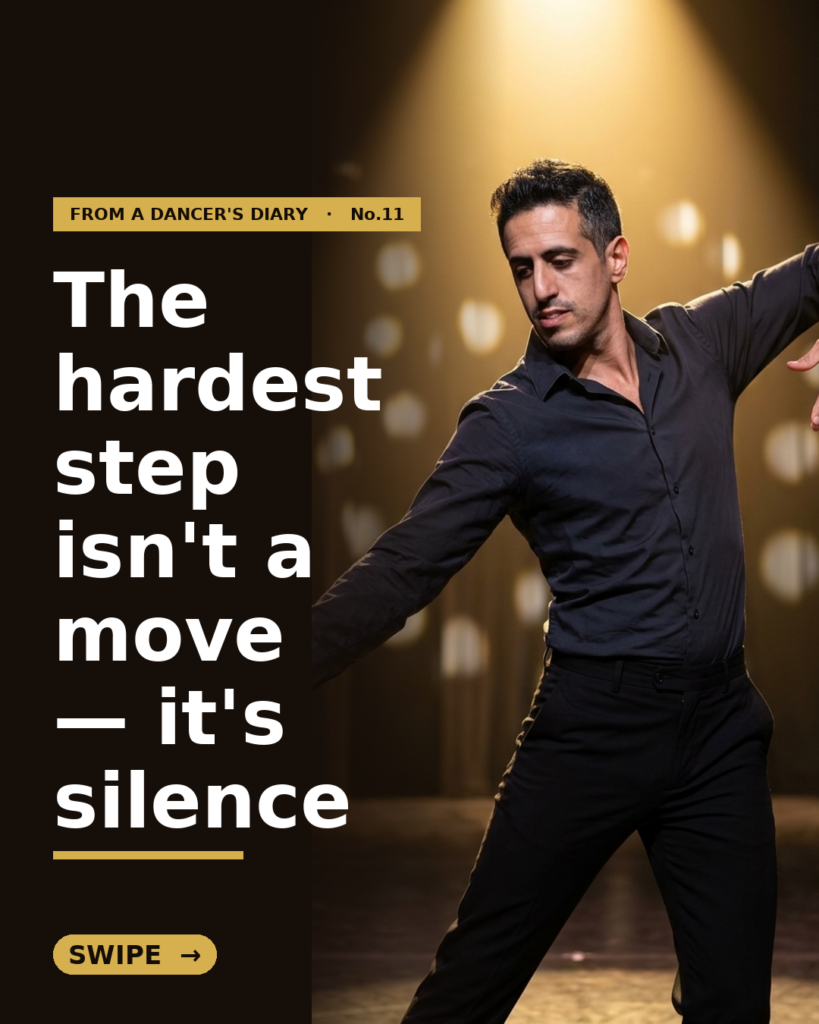
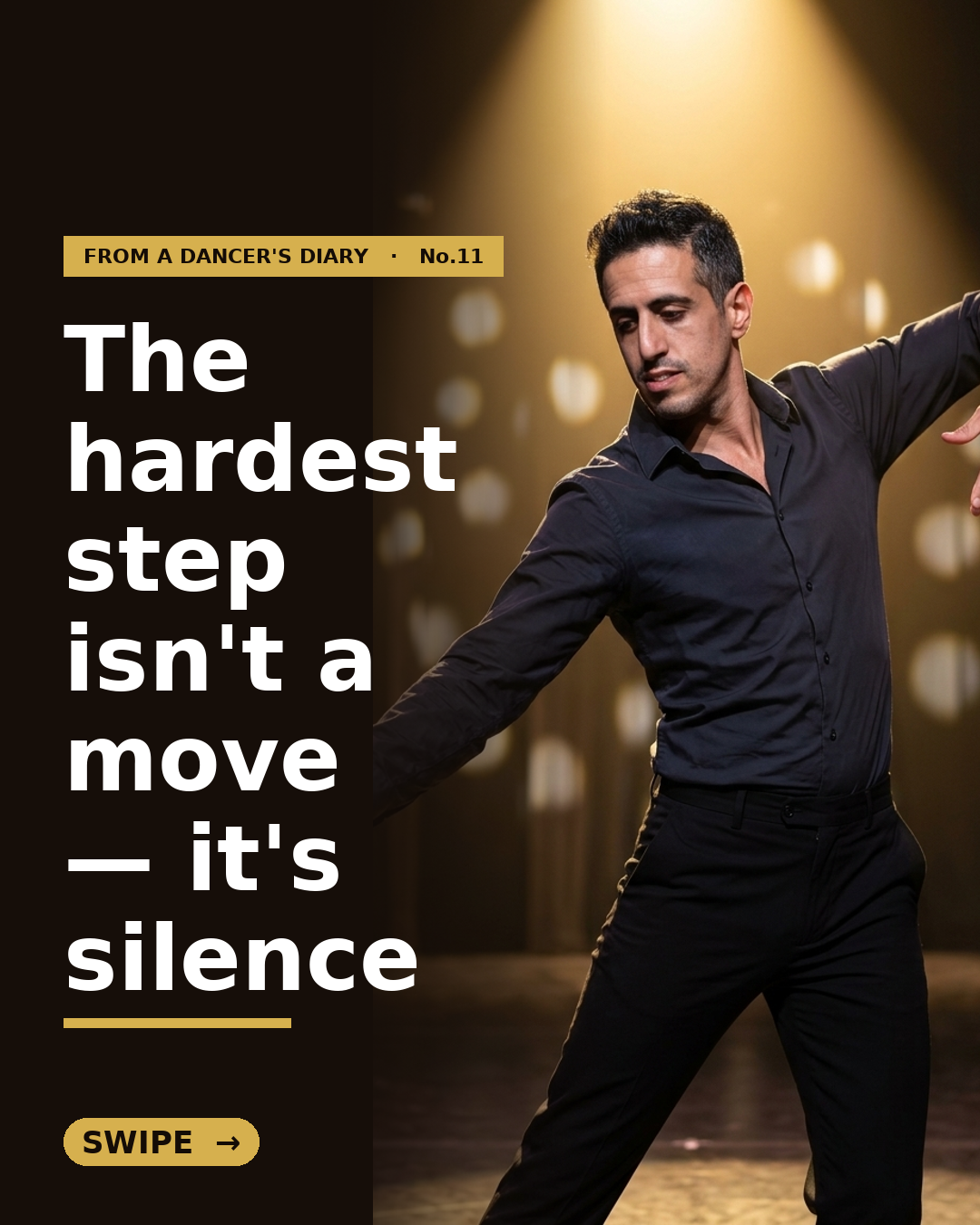
It was a Tuesday beginners' course, maybe six weeks in. The song was a slow bachata, and I asked the whole room to freeze — not stop, freeze — on the silence between two phrases. Nobody moved. Feet planted, breath held, eyes searching for the next beat. Three seconds of nothing. And in that nothing, I watched twelve couples suddenly stand up straighter, look at each other for the first time all class, and actually feel the music instead of chasing it.
That's when someone in the back row said, half-laughing, "This is the hardest step you've taught us." She was right. Standing still, together, on purpose — that's harder than any turn pattern.
The Beat Isn't the Point — the Gap Is
Most beginners think musicality means hitting every beat. Step, step, step, never miss one. But real musicality lives in restraint — in the choice to not move when everyone expects you to. A pause held with intention says more than four fast turns ever could. In sensual bachata, a single suspended body wave, timed to land exactly on the silence before the drop, can carry more emotional weight than an entire eight-count of footwork.
I tell my students: the note is information, but the space between notes is meaning. Anyone can learn where the beat falls. Few learn to trust the emptiness before it.
What Silence Demands From a Leader
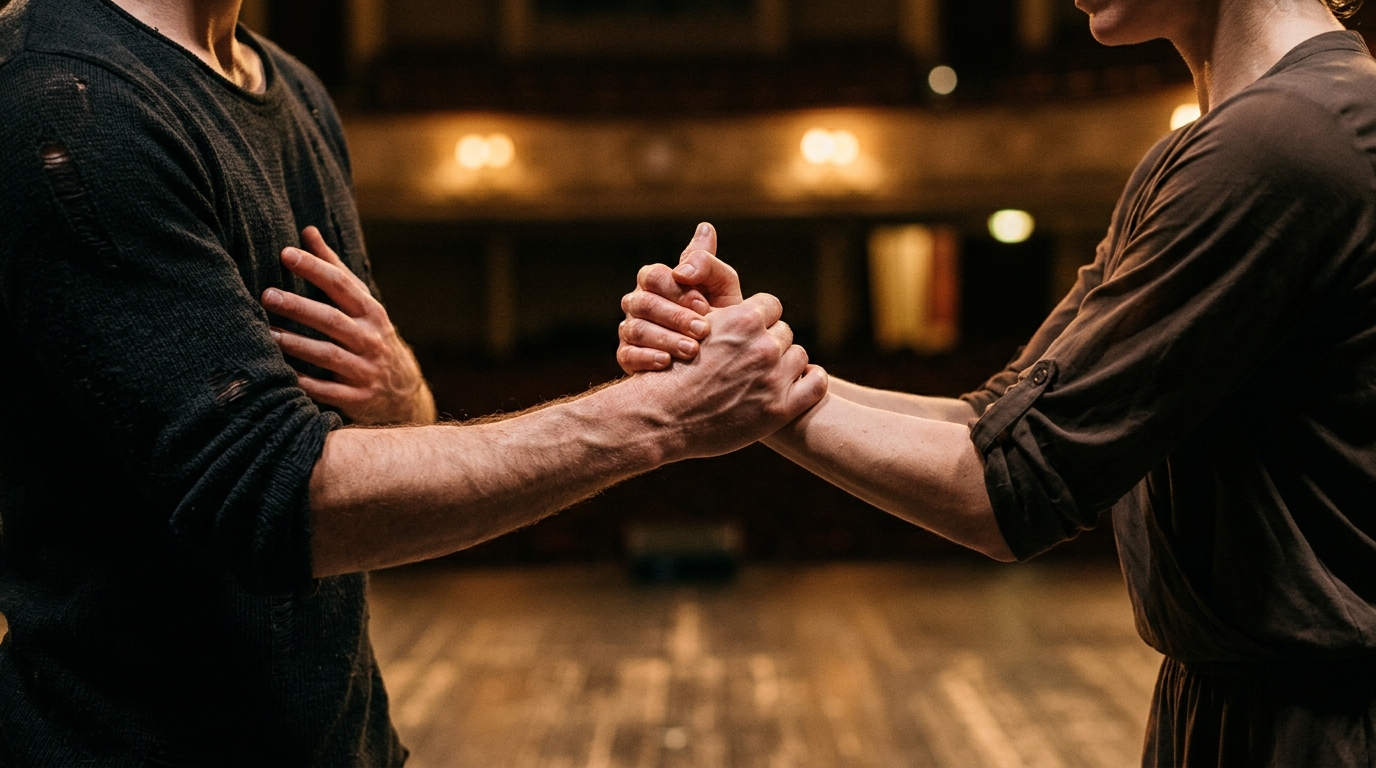
As the lead, a pause is an act of vulnerability. You're offering your partner a moment with no instruction, no momentum to hide behind. If your frame collapses, if your energy drops, she feels it instantly — the connection goes slack. But if you hold the pause with the same quality of presence you held the movement, something remarkable happens: trust deepens. She learns she can lean into stillness with you and not fall.
I've seen this exact dynamic in a boardroom. Years ago, presenting a risk assessment to a bank's executive committee, I hit a slide with a number nobody wanted to hear — a critical gap that would cost real budget to close. My instinct was to fill the silence, to keep talking, soften it. I didn't. I paused. Four seconds, maybe five. It felt like a minute. But that silence gave the room space to actually absorb the number instead of deflecting it. The CFO finally said, "Okay — what do we do about it." The pause did more work than any slide I'd built.
What Silence Demands From a Follower
For the follower, the pause is a test of patience, not passivity. A skilled follower doesn't fill the gap with her own movement out of anxiety — she stays present, weight centered, ready, trusting that the lead will return with intention. That readiness-without-rushing is its own art. It's the same muscle a good analyst uses when a system goes quiet and everyone wants an answer immediately: the discipline to wait one more beat before acting, because the next signal — the real one — is about to arrive.
The Festival Floor at Midnight
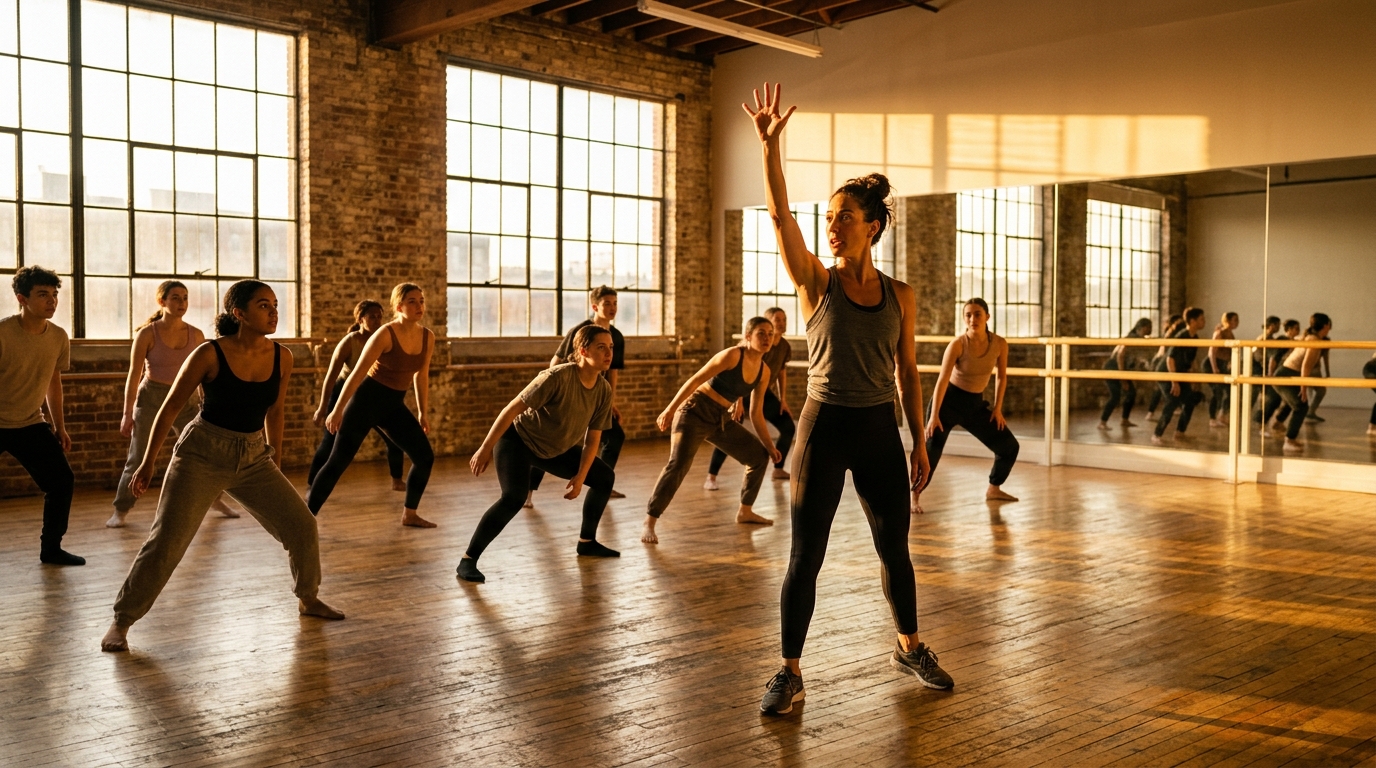
At UNO Festival last year, I remember a specific moment on the social floor around midnight — the room fuller than we'd planned for, energy running hot all night. A DJ dropped into a break, that classic bachata moment where the music drops to almost nothing before building back. For two or three seconds, nearly every couple on that crowded floor stopped moving at once. It wasn't choreographed. It was two hundred people who'd learned, through months of classes and socials, to recognize and honor that gap. When the beat returned, the whole room moved back into it together, like one breath released. That's a community that has learned to listen — not just to music, but to each other.
Where This Shows Up Off the Floor
I think about this constantly in cyber leadership. A Zero Trust rollout, an incident response drill, a CAIO course discussion on the EU AI Act — the temptation is always to keep talking, keep building, keep filling every gap with more content, more controls, more slides. But the moments that actually change minds in a room are usually the quiet ones: the pause after a hard question, the silence you let sit after showing a client their true exposure, the beat you hold before offering a recommendation instead of rushing to fix everything at once.
Presence isn't measured by how much you say or do. It's measured by whether you're fully there — even, especially, when nothing is happening.
Learning to Trust the Gap
A few practical things I've learned, on the floor and off it:
- Hold the frame in silence. A pause with weak posture reads as hesitation. A pause with full presence reads as intention. The physical stance you keep during "nothing" is what makes the pause meaningful rather than awkward.
- Don't fill every gap. In conversation, in leadership, in dance — resist the urge to move or speak just because silence feels uncomfortable. The gap is doing work; let it.
- Practice stillness deliberately. I have students freeze mid-song on purpose, weekly, until it stops feeling foreign. Confidence in silence is trained, not innate.
- Return with intention, not panic. When the pause ends — the beat drops, the meeting resumes, the incident escalates — come back present and clear, not rushed. How you re-enter matters as much as how you paused.
Back to That Tuesday
By the end of that beginners' class, the same students who'd struggled to freeze for three seconds were finding pauses on their own, without me asking — a small hesitation before a turn, a held breath before a dip, choices instead of reflexes. They'd learned, in one evening, that dancing isn't only what you do to the music. It's also what you choose not to do, together, in the space it leaves you.
That's the lesson I keep returning to, on every floor I stand on: the pause isn't empty. It's where the trust actually lives.
If you'd like to feel this for yourself — the pause, the connection, the quiet confidence that comes from real presence — come join a class at Cyber Dance in Rosh Pina. We meet at the Rosh Pina community centre for weekly courses and socials; beginners always welcome, no partner needed. Reach us at +972-50-2020086, follow @cyber.dance.il on Instagram, or register directly at https://edu.cyber-school.co.il/dance/.
Want to dance? Cyber Dance — a Latin dance school in Rosh Pina, Israel. Workshops & courses for every level · +972-50-2020086 · join here · IG @cyber.dance.il.