From a Dancer's Diary #14 — The Courage to Be Led: Why Surrender Is a Strength, Not a Weakness

There is a moment in almost every beginner's first bachata class where I watch something break — not physically, but emotionally. It happens when I ask the follower to close her eyes for eight counts and simply be led. Nine times out of ten, the body freezes. The feet stay planted. The trust isn't there yet. And that's exactly the point where the real lesson begins.
The Night a CFO Couldn't Let Go
A few years ago, a senior finance executive — the kind of man who runs quarterly board reviews without blinking — joined one of our weekly socials in Rosh Pina. He was sharp, decisive, used to being the one who calls the shots. On the dance floor, he wanted to lead everything: the timing, the turns, even when he was supposed to follow a simple exercise where I asked partners to switch roles for two minutes.
He couldn't do it. Not because he lacked coordination — he picked up steps quickly — but because giving up control, even for 120 seconds, felt like defeat to him. He later told me it was the most uncomfortable moment he'd had in years, more uncomfortable than presenting a failed budget forecast to his board.
What Surrender Actually Means
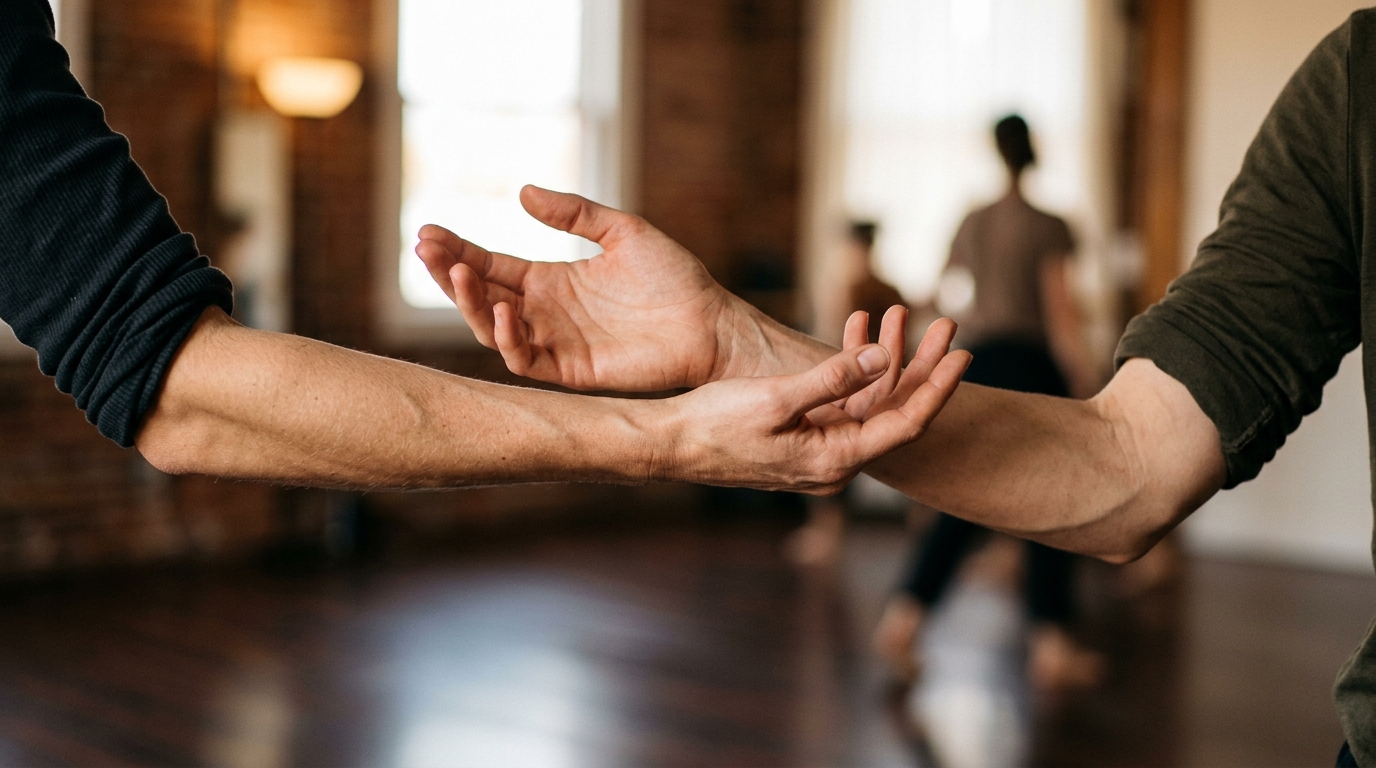
In Latin partner dance, and especially in sensual bachata, we talk a lot about "elastic connection" — the idea that leading and following are not opposite forces but a shared conversation happening through subtle tension and release. The follower isn't passive. She is reading micro-signals, responding in real time, adjusting her weight, her frame, her breath — all while trusting that the lead won't put her somewhere unsafe.
That trust isn't naive. It's earned, tested, and continuously renewed with every song. A skilled follower isn't "giving up" anything. She's exercising one of the most demanding skills in the room: staying fully present while relinquishing the need to control the outcome.
I've seen students spend months building strength, technique, and confidence — only to hit a wall the moment they're asked to let someone else guide the direction. It's not a technical wall. It's psychological.
The Leadership Parallel I Live Every Day
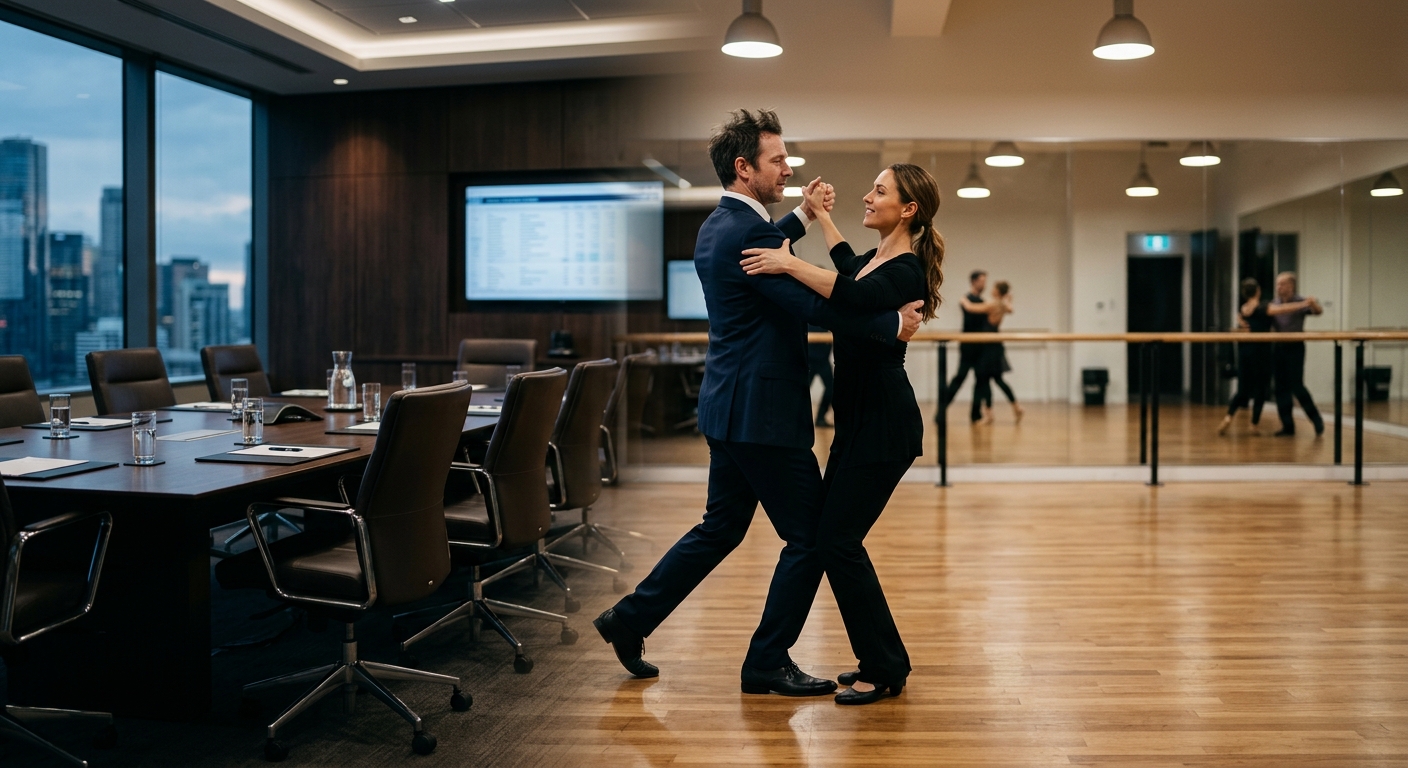
In my other life, I sit in rooms with banks, ministries, and global enterprises, building Zero Trust architectures and running enterprise risk assessments against NIST and ISO frameworks. Zero Trust, ironically, is built on a principle that sounds like the opposite of surrender — "never trust, always verify." But the deeper truth is the same one I teach on the dance floor: real trust isn't blind. It's structured, tested, and mutual.
When I served in MAMRAM, training over 200 people in operational cyber and forensics, the best analysts weren't the ones who insisted on controlling every variable. They were the ones who could hand off a thread of an investigation to a teammate, trust the process, and stay present for what came next — because control isn't the same as competence, and letting go isn't the same as losing.
I've watched the same pattern in boardrooms. The executives who struggle most with delegation, with trusting a CISO's recommendation, with allowing a security architecture to evolve without micromanaging every control — they're often brilliant, but exhausted. Their grip on control is costing them more than it's protecting them.
Why the Follower's Role Is the Harder One
People assume leading is the difficult skill in partner dance — the one who decides, who initiates, who "does the work." But anyone who has danced seriously with a skilled follower knows the truth: following demands total presence. You can't follow well while distracted, while anxious, while planning your next move. You have to be *here*, in this count, in this breath, ready to respond to whatever comes.
That CFO eventually came back, week after week. Around his sixth class, something shifted. He let a turn happen without anticipating it. He stopped trying to "win" the dance. Afterward, he said something I still think about: "I forgot I was allowed to just be moved."
Building UNO on the Same Principle
When I started building the UNO Festival to unite the Latin dance community across northern Israel, I had to apply this same lesson at a community level. I couldn't control every dancer, every teacher, every social's energy. I had to trust instructors I'd trained, trust organizers I'd never fully micromanage, trust that a room full of strangers from different studios would find rhythm together without me directing every second of it.
The festival works today — hundreds of dancers, dozens of teachers, a real regional community — precisely because surrender was built into its foundation. Not chaos. Structured trust.
Practical Takeaways
- Trust is a skill, not a feeling. Like a follower reading a lead's frame, build trust through small, repeated, tested moments — not one leap of faith.
- Presence beats control. The person fully in the moment adapts faster than the person trying to predict every outcome.
- Delegation is a form of leadership, not an absence of it. Whether it's a dance turn or a security decision, letting someone else carry a piece of the outcome often produces a better result than holding everything yourself.
- Practice surrender in low-stakes moments. Start with eight counts on a dance floor, or a small task at work — build the muscle before you need it under pressure.
Back to the Beginning
These days, when a new student freezes during that eight-count "eyes closed" exercise, I don't rush them. I just remind them: nobody is asking you to disappear. You're being asked to trust the frame, trust the connection, and discover that being led well is its own kind of strength. The CFO who once couldn't let go of a turn now shows up almost every week — sometimes leading, sometimes following, always a little more at ease with not knowing exactly what comes next.
If you've never felt what it's like to be fully, safely led — on a dance floor or anywhere else — I'd love for you to experience it. Join us for a class or a social evening at Cyber Dance, in the Rosh Pina community centre. Reach out on WhatsApp at +972-50-2020086, follow us on Instagram @cyber.dance.il, or find your first class here: https://morning-sale.page/bachata.
Want to dance? Cyber Dance — a Latin dance school in Rosh Pina, Israel. Workshops & courses for every level · +972-50-2020086 · join here · IG @cyber.dance.il.